
Introduction to Software Defined Radio (SDR)
Software Defined Radio (SDR) is a radio communication paradigm in which traditional signal processing functions, previously implemented in hardware, are instead executed through software.
Since its emergence in the early 1990s, SDR has rapidly gained popularity in both academic research and engineering practice due to its high flexibility, reconfigurability, and scalability. Today, SDR has become a key technological foundation for modern wireless communication systems.
In an SDR architecture, modulation, demodulation, filtering, encoding, and protocol processing are primarily handled by software, while the hardware is reduced to a minimal RF front-end and high-speed data interfaces. This design approach:
- Significantly reduces development and verification costs
- Greatly improves system reconfigurability and scalability
- Accelerates the transition from dedicated hardware to general-purpose computing platforms
As a result, SDR is widely adopted in research, education, prototyping, wireless security, and amateur radio applications.
Comparison of Mainstream SDR Platforms
The following comparison is based on personal experience and community feedback and represents an engineering-oriented perspective.
HackRF One
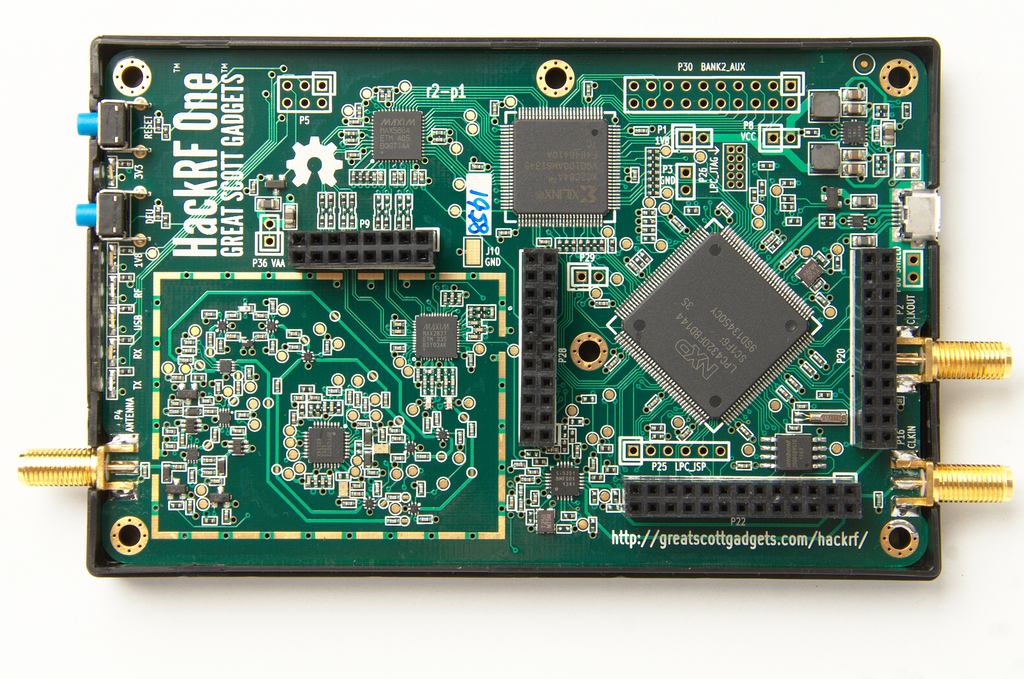
HackRF One is one of the most widely recognized SDR platforms and is often considered an ideal entry-level device.
Advantages
- Excellent cross-platform support (Windows, Linux, macOS)
- Active community with abundant tutorials and tools
- Selectable RF filtering options
- Wide frequency range: 1 MHz – 6 GHz
- Native support by most mainstream SDR software
Limitations
- 8-bit ADC and DAC with limited dynamic range
- USB 2.0 interface with a maximum practical bandwidth of ~20 MHz
- Half-duplex operation only
- Better suited for monitoring and experimentation than high-performance communication systems
LimeSDR
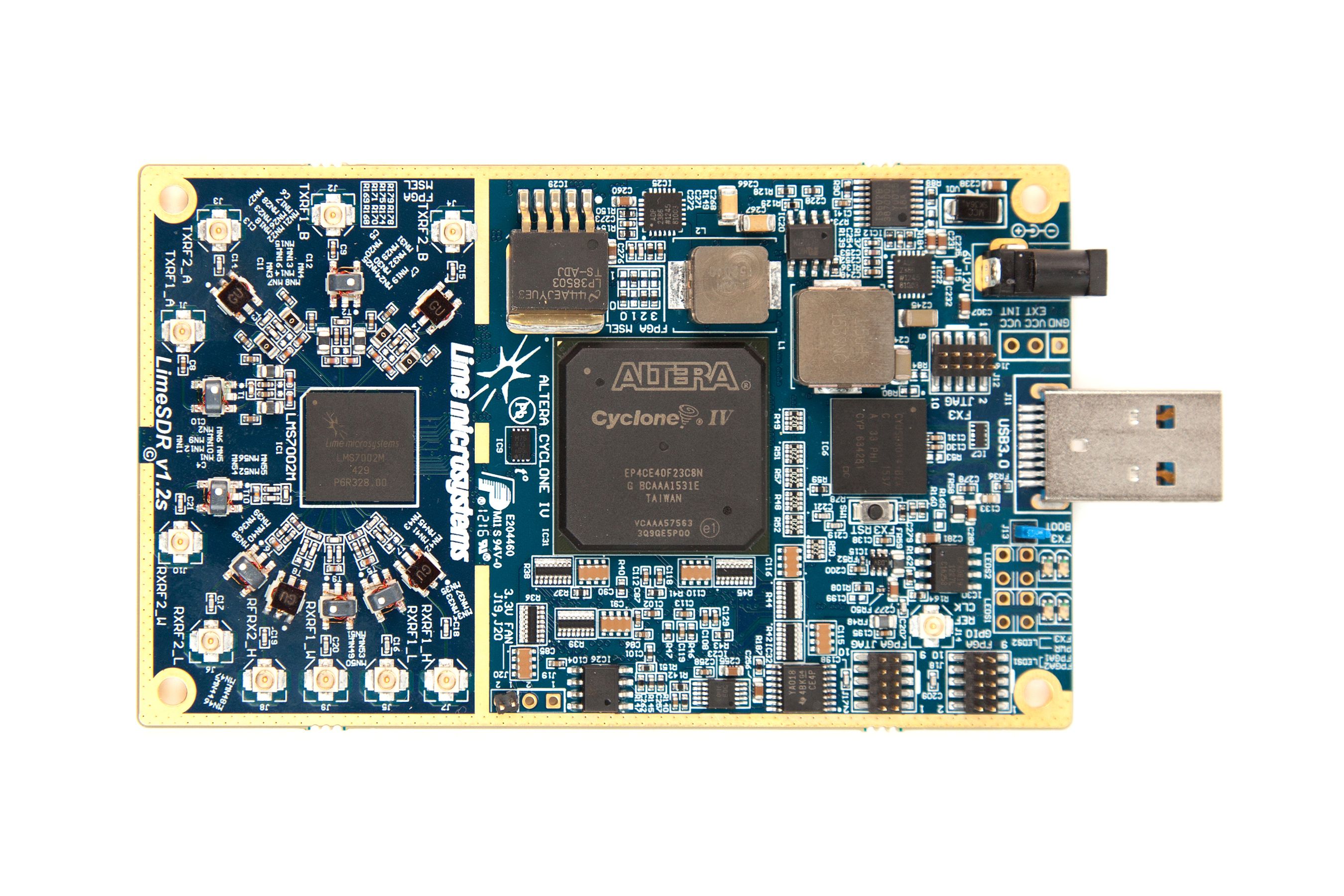
LimeSDR is known for its higher performance and open architecture and is commonly used in LTE and 5G prototyping.
Advantages
- 12-bit ADC and DAC
- Frequency range: 100 kHz – 3.2 GHz
- Full-duplex 2×2 MIMO support
- USB 3.0 or PCIe interface with up to 61.44 MHz bandwidth
- Onboard TCXO for improved frequency stability
- Higher sensitivity and overall performance than HackRF
Limitations
- Thermal challenges under high-frequency operation
- Limited front-end filtering, prone to image and spurious signals
- Drivers and libraries may be sensitive to OS updates on Windows and Ubuntu
PlutoSDR (ADALM-Pluto)
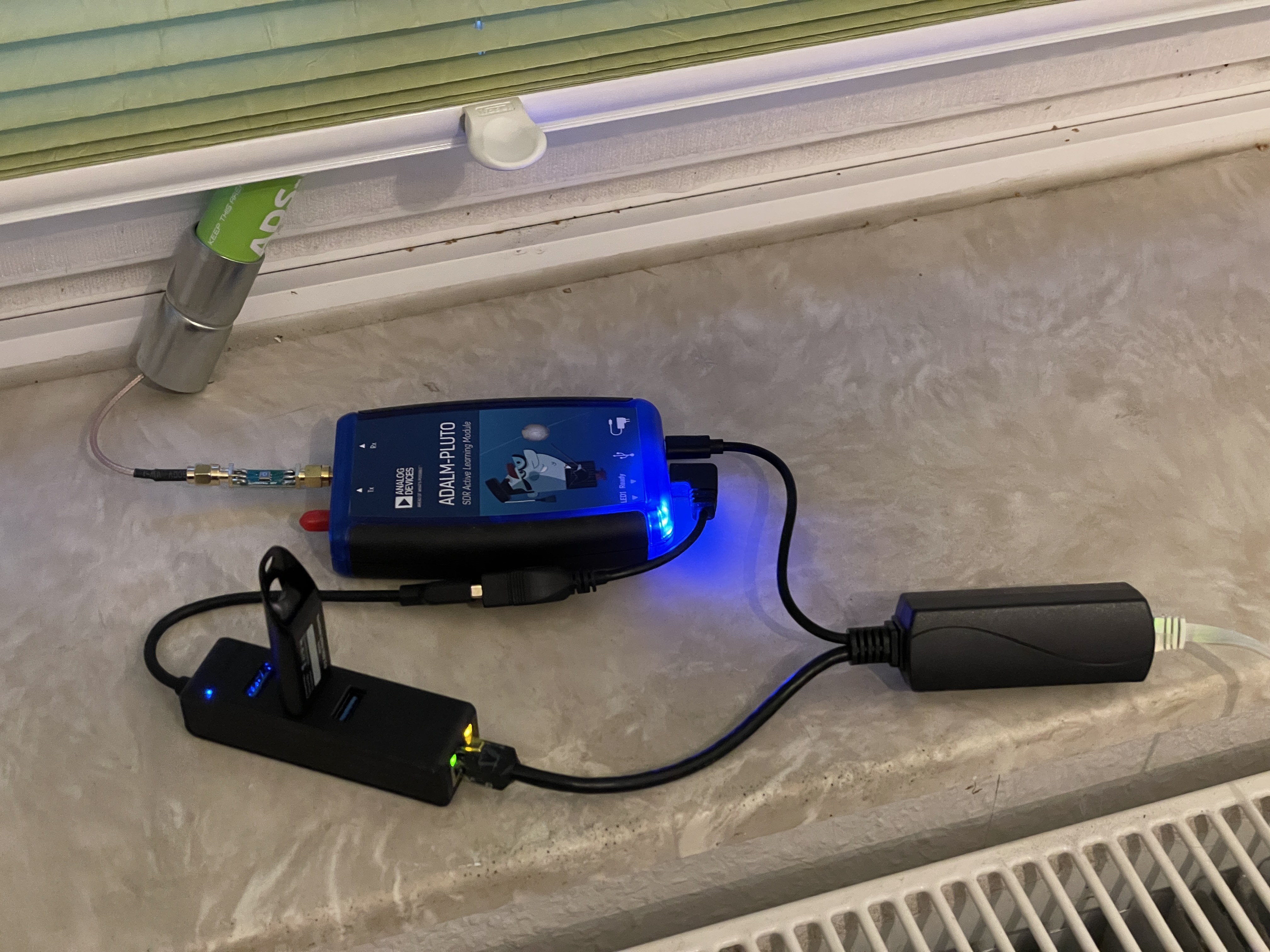
PlutoSDR, developed by Analog Devices, is a cost-effective platform designed for education and engineering experimentation.
Advantages
- 12-bit ADC and DAC
- Nominal frequency range: 325 MHz – 3.2 GHz
- Firmware-expandable range: 70 MHz – 6 GHz
- Full-duplex operation
- Embedded Linux system capable of standalone operation
- FPGA + ARM architecture enabling hardware-software co-design
- USB OTG or Ethernet connectivity via adapters
- Good receiver sensitivity at a competitive price
Limitations
- USB connection stability may vary across environments
- Limited RF filtering leading to image artifacts
- USB 2.0 interface with ~4 MHz practical bandwidth
- Wide spectrum observation possible but with significant sampling loss
- Lack of convenient high-precision external clock synchronization
Applications and Open-Source Ecosystem
The strength of SDR lies not only in hardware capability but also in its extensive open-source ecosystem, including:
- Software-defined radio receivers and signal monitoring
- Digital communication and wireless video transmission
- OpenWiFi: https://github.com/open-sdr/openwifi
- OpenLTE: https://sourceforge.net/p/openlte/wiki/Home/
- Wireless protocol analysis and security research
In the RF chipset domain, Analog Devices (ADI) has made significant contributions to SDR development. The AD93xx series (such as AD9361, AD9363, and AD9371) stands out for its performance, documentation quality, and ecosystem support.
Reference: ADI SDR Hardware Documentation
Conclusion
- HackRF One is ideal for learning, monitoring, and protocol analysis
- LimeSDR suits performance-oriented and MIMO-based communication prototyping
- PlutoSDR offers strong educational and engineering value within the ADI ecosystem
SDR is not merely a hardware implementation approach but a system-level wireless design philosophy. With continuous advancements in FPGA, SoC, and general-purpose computing, SDR is steadily lowering the barrier to wireless system development and enabling more flexible and efficient engineering solutions.